
Reviewed by the Cactus GGT product team · Updated November 2026
Tarpaulin vs canvas in short: for long outdoor duty in the UAE sun, PVC (vinyl) tarpaulin is usually the best cover material. Choose canvas when the load needs to breathe. Choose polyethylene (PE / poly) when the job is temporary and budget or weight matters more than years of service. “Vinyl tarp” and PVC tarpaulin are the same family of coated polyester covers.
This comparison is written from how we specify and supply covers for Abu Dhabi and UAE sites: heat, UV, coastal humidity and shamal winds. The same material differences apply if you are comparing tarpaulin vs canvas or PE vs PVC anywhere else.
How we compared: We matched each material to typical manufacturer and supplier specification ranges (GSM, waterproofing, breathability, fabrication and outdoor duty), then mapped those to the jobs we see most often. Ranges below are typical industry bands, not a lab test of one batch. Ask for the GSM, base fabric, UV package and seam method on the sheet you actually buy.
Table of Contents
- What is the difference between PVC, canvas and PE tarpaulin?
- Is PVC or PE tarpaulin better?
- Tarpaulin vs canvas: which should you buy?
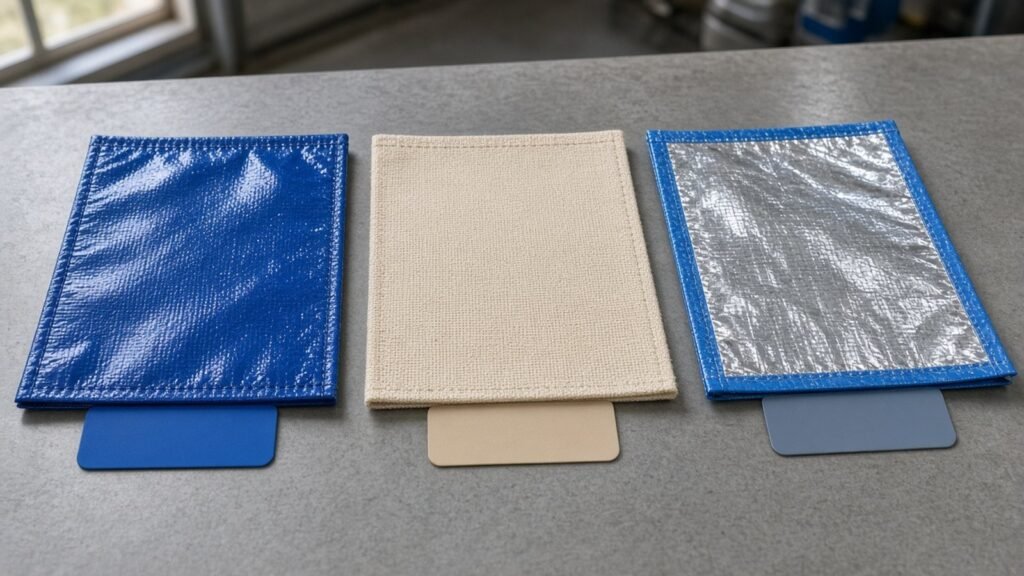
- How do PVC, canvas and PE compare side by side?
- Which tarpaulin is best for outdoor use in the UAE?
- Which tarpaulin should you choose for each job?
- How do you choose a PVC tarpaulin (buying checklist)?
- How long does each tarpaulin last, and how do you care for it?
- What about the polyethylene tarpaulins market?
- Frequently asked questions about tarpaulin materials
What is the difference between PVC, canvas and PE tarpaulin?
PVC is a polyester fabric with a waterproof PVC coating (often called vinyl). Canvas is a woven cotton or polyester cloth that breathes and is usually water-resistant, not sealed waterproof. PE is a lighter woven plastic sheet with a PE laminate, waterproof and built for shorter outdoor use.
People mix the names. “Plastic tarp” and “poly tarp” usually mean PE. “Vinyl tarp” usually means PVC-coated polyester. “Canvas tarp” means the breathable woven cloth. Knowing which family you are buying stops you comparing a light PE sheet to a heavy truck PVC as if they were equals.
Is PVC or PE tarpaulin better?
PVC is better when you need long outdoor life, abrasion resistance and welded waterproof seams. PE is better when you need a light, low-cost cover for days or weeks. Both can be waterproof; the gap is durability under UV, wind and repeated handling, not whether rain gets through a sound sheet.
If your search is “is PE or PVC tarpaulin better?” or “poly vs vinyl tarp”, answer it with duty cycle. Daily truck covers, long site weather sheets and marquees lean PVC. Temporary material cover, a ground sheet or a one-weekend event leans PE. Paying more for PVC only pays back if the cover stays in service long enough to replace several PE sheets.
Tarpaulin vs canvas: which should you buy?
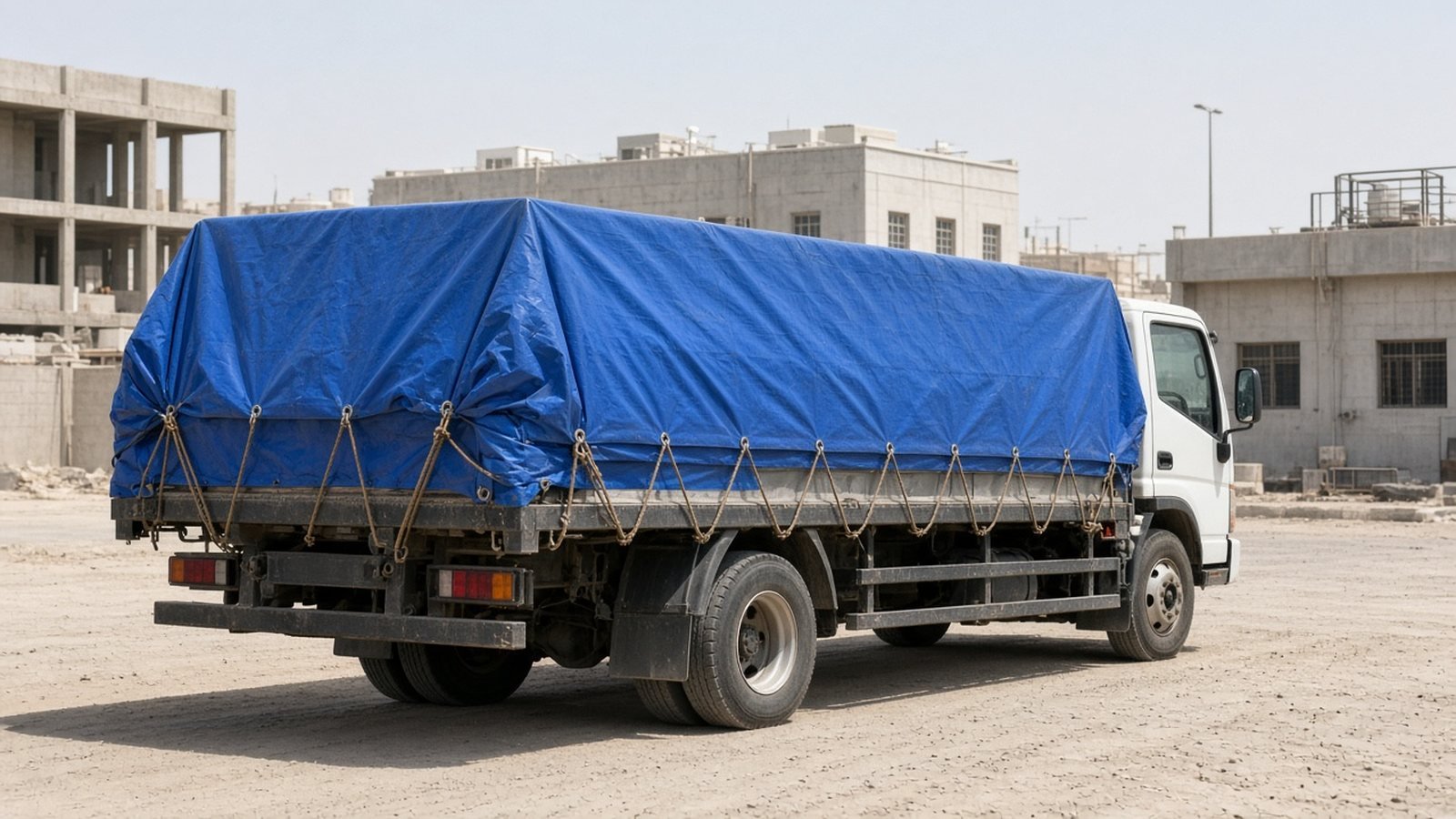
Buy PVC when you need sealed waterproofing and outdoor life. Buy canvas when condensation under a sealed cover would damage the load, or when a breathable worksite cover is enough. Canvas is water-resistant with treatment; it is not a substitute for a welded PVC sheet in standing rain.
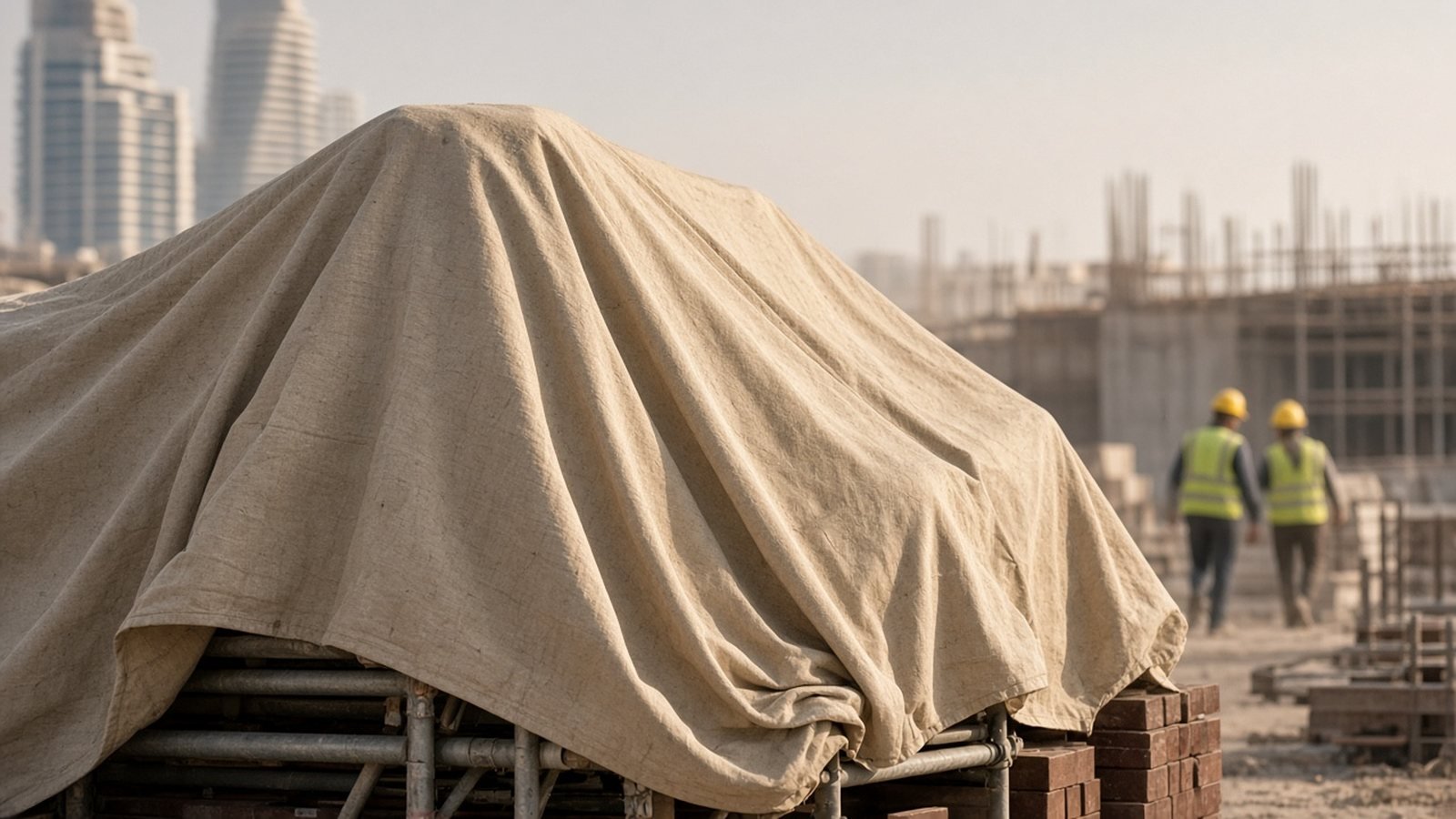
That is the real “tarpaulin vs canvas” / “canvas vs plastic tarp” trade-off. Canvas wins for timber, some stored equipment and painting protection where airflow matters. Sealed plastics win when the cover must stay dry in wind-driven rain. In UAE outdoor storage, untreated canvas also ages faster under UV and can hold moisture after coastal humidity or overnight dew.
How do PVC, canvas and PE compare side by side?
Side by side, PVC leads on waterproof seams, abrasion and outdoor lifespan; canvas leads on breathability; PE leads on low weight and low price. Use the table as a buying map, then confirm GSM, UV package and seam type on the quote.
| Feature | PVC (vinyl) | Canvas | PE (poly) |
|---|---|---|---|
| Material | PVC-coated or laminated polyester (also called vinyl tarp) | Woven cotton or polyester canvas, often water-repellent treated | Woven polyethylene tape with PE laminate (poly tarp) |
| Waterproofing | Fully waterproof; welded seams can stay sealed under ponding water | Water-resistant when treated; not sealed waterproof in prolonged rain | Fully waterproof when seams and edges are sound |
| Breathability | Low; condensation can form under a tight cover | High; lets trapped moisture escape | Low; similar sealed feel to PVC |
| UV / UAE heat | Strong when UV-stabilised; preferred for long outdoor duty in desert sun | Weaker outdoors unless heavily treated; heat and UV dry fibres | Depends on UV package; basic grades chalk and embrittle faster |
| Typical GSM / weight | Often about 450–900 GSM for industrial grades; truck covers commonly 600–750 GSM | Often sold by oz/yd²; roughly 10–20 oz (about 340–680 GSM) for utility to heavy duck | Often about 80–300 GSM; light and easy to handle |
| Tear / abrasion | High tear and abrasion resistance for repeated tying and road use | Good fabric strength; repairable; weaker against prolonged wet abrasion | Moderate; punctures more easily under rough handling |
| Typical outdoor life (UAE sun) | Often several years with UV grade and care; desert/tropical duty is harder than temperate use | Shorter outdoors without re-treatment; better for breathable short–medium cover | Often months to a few years; best as temporary or light-duty cover |
| Typical uses | Truck covers, industrial storage, marquees, site weather sheets, long-term outdoor | Painting, timber/equipment that needs to breathe, short outdoor cover | Temporary site cover, ground sheets, short events, budget protection |
| Relative cost | Highest upfront; often lowest cost per year of outdoor service | Mid range | Lowest upfront |
For finished sizes and GSM grades sold for UAE duty, see our PVC tarpaulin size and GSM guide.
Which tarpaulin is best for outdoor use in the UAE?
For long outdoor use in Abu Dhabi and the wider UAE, UV-stabilised PVC is usually the best tarpaulin. Heat, intense UV, sand abrasion and shamal winds punish thin PE coatings and dry out untreated canvas. PE still works for short jobs; canvas still works when the load must breathe.
Outdoor “best” depends on months of exposure, not a single rainstorm. Coastal humidity can leave overnight moisture under sealed covers, so ventilate or shape covers to shed water. Inland desert sites add UV dose and sand. If you need fire performance on industrial sites, specify a tested fire-retardant grade rather than assuming any blue tarp is rated — see our tips on buying fire-rated tarpaulin.
Which tarpaulin should you choose for each job?
Match the material to the job: PVC for trucks, long site covers and marquees; canvas when breathability matters; PE for temporary and budget cover. The checklist below is the practical version of “which tarpaulin is best”.
| Use case | Usually choose | Why |
|---|---|---|
| Truck / trailer covers & road spray | PVC | Needs abrasion resistance, waterproof seams and UV grade |
| Construction scaffolding / long site weather sheet | PVC (or heavy PE for short jobs) | PVC for months of sun and shamal; PE for a few weeks |
| Warehouse / indoor storage curtains | PVC or PE | PVC if chemical or wash-down duty; PE if budget temporary |
| Equipment that must breathe (timber, some machinery) | Canvas | Stops condensation better than sealed plastics |
| Marquees / long-term outdoor tents | PVC | Choose UV-stabilised, fire-retardant grade where required |
| One-off temporary cover / ground sheet | PE | Light, cheap, easy to replace |
More UAE use cases — from plant cover to event shade — are listed in our guide to tarpaulin uses in the UAE. Browse current grades in tarpaulin sheets or the PVC tarpaulin sheets product page.
How do you choose a PVC tarpaulin (buying checklist)?
Choose PVC by GSM and base fabric for the duty, then check UV stabilisation, seam method, reinforced hems and eyelets, and fire rating if your site needs it. A thick-looking sheet with weak hems or no UV package still fails early outdoors.
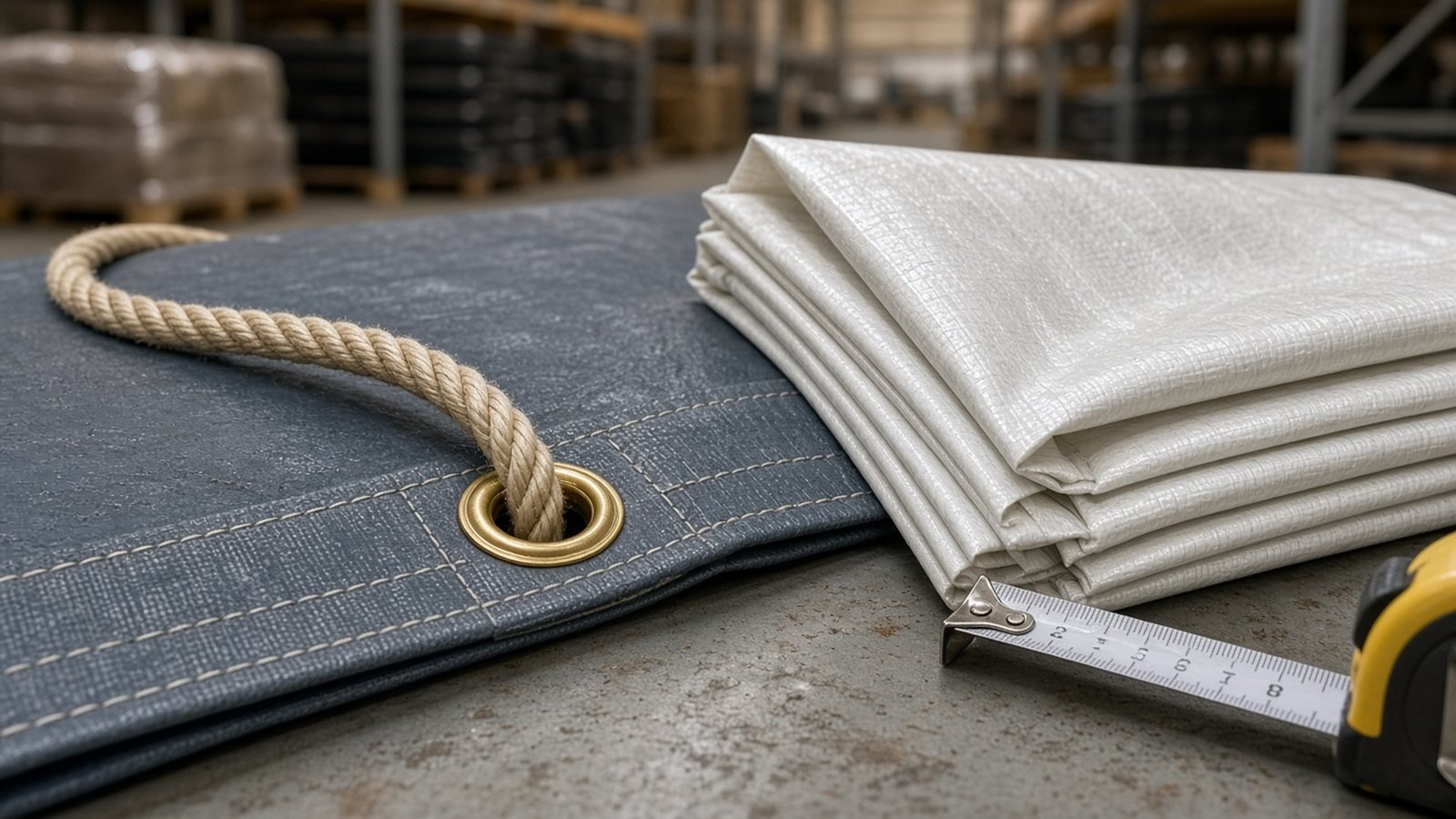
- GSM and denier: GSM is finished fabric weight. Denier describes yarn size in the base cloth. For industrial outdoor PVC, buyers often look in the mid-to-high hundreds of GSM; light PE sheets sit much lower. Ask for both numbers.
- Coating: Knife-coated PVC generally welds and wears more consistently than a thin laminate. Confirm coating on both faces for truck and weather sheets.
- Seams: Hot-air or HF welded seams suit waterproof PVC covers. Stitched seams suit canvas and many PE sheets; stitch holes need sealing if you need a dry interior.
- Hems and eyelets: Rope-reinforced hems and corrosion-resistant eyelets stop the first tear starting at a tie-down point.
- UV package: For UAE outdoor duty, ask how UV resistance was tested and whether the grade is intended for continuous sun.
- Fire retardancy: Only when your site or client specification requires a named test. Do not treat “industrial” as fire-rated.
How long does each tarpaulin last, and how do you care for it?
Service life depends on UV grade, tension, abrasion and climate more than the material name alone. Well-specified PVC often lasts several outdoor years; PE is commonly a shorter-cycle cover; canvas life hangs on treatment and how wet it stays. Care extends all three.
- Tension covers so water and sand shed; standing ponds cook PVC plasticisers and stain canvas.
- Rinse abrasive dust after shamal winds before folding.
- Store dry and loosely folded, out of continuous sun when not in use.
- Inspect eyelets and corners; repair small tears early.
- Re-treat canvas water-repellency when beads stop forming.
Step-by-step care for local weather is in our tarpaulin maintenance tips for UAE weather and the longer PVC maintenance guide.
What about the polyethylene tarpaulins market?
Interest in the polyethylene tarpaulins market is mostly commercial research: PE remains widely used because it is light, waterproof and cheap for temporary cover worldwide. This page does not publish market-size figures. For a buying decision, judge PE on duty cycle and UV grade, not on global market headlines.
If you are comparing suppliers rather than materials, start from the sheet specification and the job duration. Material choice first; vendor second.
Frequently asked questions about tarpaulin materials
What is PVC tarpaulin?
PVC tarpaulin is a woven polyester base coated or laminated with polyvinyl chloride. The PVC face makes the sheet waterproof and weldable. In many markets it is sold as a vinyl tarp.
Is PE or PVC tarpaulin better?
PVC is better for long outdoor use, abrasion and welded waterproof seams. PE is better for light, low-cost, short-term cover. Neither is universally “better” without knowing how long the cover must last.
Which is better, canvas tarpaulin or PVC tarpaulin?
PVC if you need sealed waterproofing and outdoor durability. Canvas if the load must breathe and light-to-moderate weather protection is enough. Canvas is not a full waterproof substitute for PVC in prolonged rain.
Is a vinyl tarp the same as PVC?
In tarp retail language, yes: vinyl tarp usually means PVC-coated polyester. It is not the same as a polyethylene (PE / poly) tarp.
What makes polyethylene tarps popular for outdoor use?
They are waterproof, light and inexpensive, so crews can cover materials quickly and replace sheets when UV or handling wears them out. Popularity reflects convenience and price, not long desert service life.
How do I choose PVC tarpaulin for long-term outdoor use?
Specify a UV-stabilised grade in a GSM band suited to the job, welded seams where waterproofing matters, reinforced hems and eyelets, and fire rating only if required. Then maintain the cover so sand and standing water do not shorten its life.
Need PVC or other cover materials sized for Abu Dhabi heat, UV and site duty? Request a quote from Cactus GGT with your size, GSM target and use case so we can suggest a suitable grade.