


Reviewed by the Cactus GGT product team · Updated November 2026
Power tool safety tips start with three habits you never skip: inspect the tool and cord, keep guards in place, and secure the workpiece with a clamp or vise so both hands stay on the tool. Add the right PPE, a clear work area and a shutdown when you finish, and you cover the quiz answers crews keep searching for — including “all of the above.”
These power tool safety tips are written for UAE workshops, fabrication bays and construction sites, where heat, dust and long shifts make shortcuts tempting. They follow the same practical rules set out in guidance such as the UK HSE leaflet on using work equipment safely and widely taught OSHA hand-and-power-tool precautions: guards on, damaged tools tagged out, loose clothing and jewellery off.
Table of Contents
- What are the 10 essential power tool safety tips?
- What safety gear do you need when using power tools?
- What should you do before starting a new power tool?
- How do you inspect a power tool and workpiece safely?
- Why must machine guards stay in place?
- How should you secure work and dress around power tools?
- What are safe practices while operating a power tool?
- Quick answers to common power tool safety questions
- Frequently asked questions about power tool safety
What are the 10 essential power tool safety tips?
The 10 essential power tool safety tips are: wear task PPE; read the manual; inspect the tool; use the right tool; keep guards on; keep hands clear; clamp the work; keep the area clean and lit; follow the operating procedure; and unplug or isolate after use. Do all of them every shift — not one of them once.
- Wear the right PPE for eyes, hearing, dust and cuts.
- Read the manual before a new tool or accessory.
- Inspect cords, batteries, blades, switches and housings.
- Match the tool and accessory to the material and task.
- Keep machine guards and safety switches fitted and working.
- Keep hands and body out of the line of cut or grind.
- Clamp or vise the workpiece instead of holding it by hand.
- Keep the area clean, dry and well lit so you can see and stand steadily.
- Follow start, feed and shutdown steps for that tool.
- Unplug, remove the battery or isolate before changing accessories and when you finish.
What safety gear do you need when using power tools?
You typically need eye protection, and often hearing protection, gloves suited to the task, and a dust mask or respirator when cutting or grinding creates dust. Add steel-toe footwear and a hard hat on construction sites. Skip loose clothing, dangling jewellery and unsecured long hair.
Choose PPE for the hazard, not for fashion. Clear goggles or a face shield for grinding; hearing protection for prolonged high noise; cut-resistant gloves when handling sharp stock, but not where a glove can catch in a rotating spindle. Stock site kits from a reliable PPE and safety items range so crews are not improvising.
What should you do before starting a new power tool?
Before you start a new tool or piece of equipment, read the instructions, check that the accessory is rated for the tool, confirm guards and switches work, and make sure you are trained for that model. Then inspect the workpiece for nails, loose parts or anything that could kick back or shatter a blade.
Three things to do every time you meet unfamiliar equipment: understand the controls and emergency stop; confirm the power source and isolation method; and walk the task hazards with your supervisor if the work is new to you. That short pause answers the common quiz question about what to do before starting work with a new tool.
How do you inspect a power tool and workpiece safely?
Inspect the tool for damaged cords, cracked housings, missing guards, sticky switches and worn blades or discs. Inspect the workpiece for fasteners, voids or trapped items that could damage the blade. Tag out anything unsafe — do not “try it once.”
Cords with cuts, tape jobs or crushed plugs belong out of service. On battery tools, check the pack for swelling or heat. For blades and abrasive discs, check rating, diameter, expiry where marked, and that the workpiece will not throw hidden metal into the cut.
Why must machine guards stay in place?
Machine guards stay in place because they keep your hands, clothing and bystanders away from belts, blades, discs and flying chips. Removing a guard to “see better” or speed a cut is one of the fastest ways to turn a routine job into an amputation or eye injury.
If a guard is broken or missing, stop. Do not operate. Repair or replace it before the tool returns to the rack. Portable circular saws and many grinders are designed around those guards; the tool is not complete without them.
How should you secure work and dress around power tools?
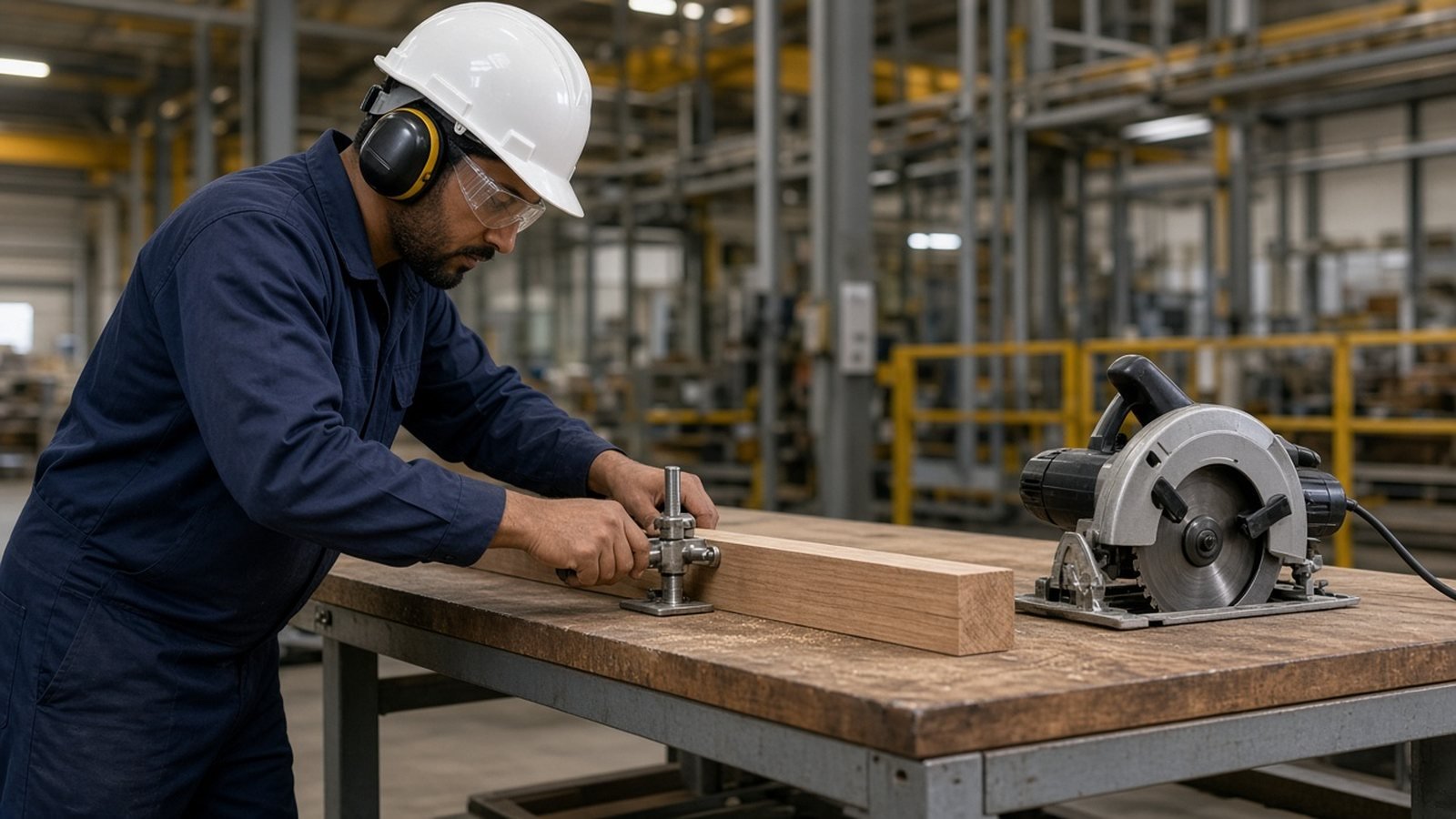
Secure the work with a clamp or vise so both hands operate the tool. Do not wear long dangling hair, jewellery or loose clothing around rotating parts — all of these can catch. Keep footing solid and the bench clear of offcuts.
On scaffolds and mezzanines, stop dropped tools with a tool tethering system and keep spare bits in a proper bag rather than loose pockets. Browse site-ready equipment in our power tools category when you replace worn kits.
What are safe practices while operating a power tool?
While operating, keep bystanders clear, maintain balance, never carry a tool by its cord, and never yank the cord to unplug. Disconnect power before changing blades or cleaning. Keep hands away from abrasive discs and blades while the tool is running.
Use the tool only for its intended duty. A drill is not a mixer; a grinder disc is not a cutting wheel unless it is rated for that cut. After the job, unplug or remove the battery, wait for moving parts to stop, and store the tool so the next person finds it guarded and tagged if defective.
For wider site habits that cut incident rates, see 10 ways to improve workplace safety and practical kit such as the Finger Saver 3G for strike-and-hold tasks.
Heat and dust on UAE sites make these habits harder to keep. Sweat under gloves tempts people to remove eye protection “for a second.” Fine dust hides cracks in housings and makes floors slippery. Build a short pre-use check into the permit or toolbox talk so the inspection is not optional when the temperature climbs.
Quick answers to common power tool safety questions
Many search queries for this page are training-quiz lines. Here are direct answers you can use in toolbox talks.
- You should ______ when working with power tools: ensure machine guards are in place / secure your work with a clamp or vise / keep your work area clean — which is correct? All of the above.
- What are 3 things you should do before starting work with a new tool? Read the instructions, inspect the tool and accessories, and confirm you understand the controls and isolation method (get training if you do not).
- You should inspect the workpiece and check for any items that might damage the blade. Yes — that is safe practice.
- The first step in working with tools is to: prepare — PPE on, area clear, tool and work inspected, guards confirmed.
- When operating a power tool it is important to always ___ keep guards in place, stay balanced, and keep hands clear of the point of operation.
- Never operate a power tool without first ___ inspecting it and confirming it is fit for use (and that you know how to use it).
- Never use any power tool while wearing: long dangling hair, jewellery or loose clothing — all of these.
- Keep hands away from an abrasive disc while a sander is running. Yes — safe practice.
- Use single-insulated tools / ensure cords are not damaged / do not use PPE — which is best? Ensure cords are not damaged (and still wear the PPE the task needs).
Frequently asked questions about power tool safety tips
What safety gear do I need when using power tools?
At minimum, eye protection. Add hearing protection for noisy tools, respiratory protection for dust, and gloves only where they will not catch in rotating parts. Site rules may also require a hard hat and safety footwear.
State 10 safety rules to follow when using power equipment
Wear PPE; read the manual; inspect the tool; use the right tool; keep guards on; keep hands clear; clamp the work; keep the area clean and lit; follow the operating steps; isolate power when changing accessories and after use.
Should machine guards always be in place?
Yes. If a guard is missing or damaged, take the tool out of service until it is repaired. Guards exist for the point of operation, rotating parts and flying chips.
Is it safe to hold a workpiece by hand while cutting?
No. Secure it with a clamp or vise so both hands control the tool and kickback is less likely to pull the work into you.
What should you check on a power tool cord?
Cuts, crushed plugs, exposed conductors and makeshift repairs. Damaged cords mean the tool is tagged out — not taped and reused.
Do these power tool safety tips apply on UAE construction sites?
Yes. The same basics apply in Abu Dhabi, Dubai and other emirates. Follow your company procedure and any project or Emirate requirements on top of these power tool safety tips.
Need PPE, tethers or replacement tools for your UAE crews? Request a quote from Cactus GGT with your site list and we can suggest suitable options.