Rain is not just a weather inconvenience for construction and industrial operations—it’s a serious operational risk. From equipment damage and electrical hazards to worker safety concerns and project delays, unprepared sites can suffer significant financial and reputational losses.
In industries like construction, oil & gas, and heavy industrial operations, proactive rain protection is not optional—it’s essential. Whether you’re managing a high-rise construction project or an industrial warehouse, having a structured rain protection checklist ensures safety, compliance, and uninterrupted productivity.
At Cactus Global General Trading, we work closely with contractors, engineers, and procurement teams across the UAE and beyond, supplying high-quality industrial materials designed to withstand harsh environmental conditions. Based on real-world experience, this guide provides a practical, expert-level checklist to help you safeguard your site during rainy conditions.
Why Rain Protection Matters in Industrial Environments
Rain affects industrial sites in multiple ways:
- Electrical hazards due to water exposure
- Material degradation such as rust, corrosion, and contamination
- Worker safety risks including slips, falls, and reduced visibility
- Project delays caused by halted operations
- Increased maintenance costs due to equipment damage
According to safety guidelines from OSHA, wet conditions significantly increase workplace accidents, especially in construction environments.
Pre-Rain Planning Checklist
Preparation is the foundation of effective rain protection.
Site Risk Assessment
Before the rainy season begins:
- Identify low-lying areas prone to flooding
- Inspect drainage systems and water flow paths
- Evaluate soil stability for excavation zones
- Assess electrical installations for exposure risks
Weather Monitoring
- Use reliable weather forecasting tools
- Assign a team member for weather tracking responsibility
- Set alert systems for heavy rainfall warnings
Emergency Preparedness
- Create a rain emergency response plan
- Conduct safety drills with workers
- Ensure availability of first aid kits and emergency contacts
Essential Rain Protection Equipment
Having the right equipment on-site makes all the difference.
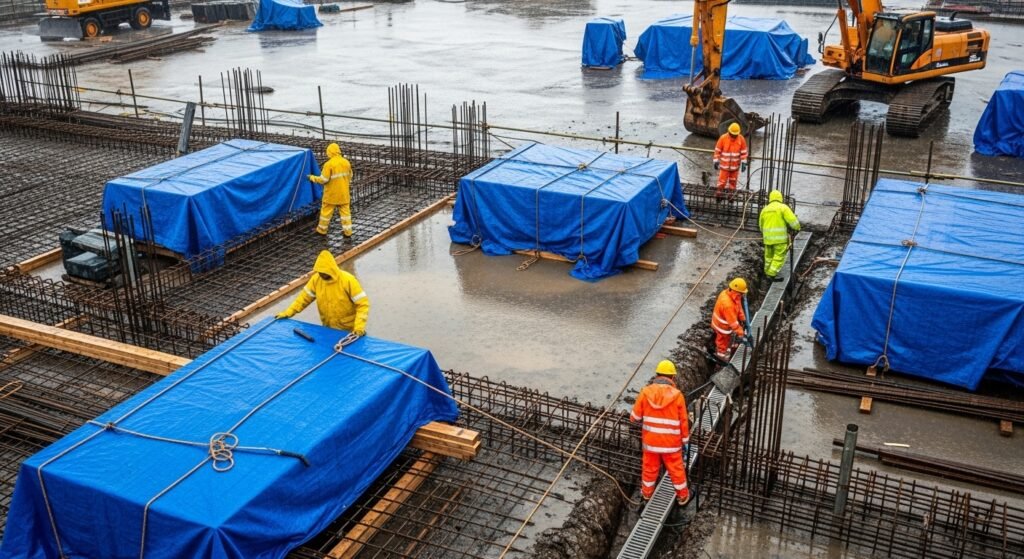
Heavy-Duty Tarpaulin Covers
Tarpaulins are your first line of defense against rain.
- Cover raw materials like cement, steel, and machinery
- Protect temporary structures and storage zones
- Use UV-resistant and waterproof materials
Explore high-quality options: https://cactusggt.com/tarpaulin-abu-dhabi/
Personal Protective Equipment (PPE)
Worker safety should never be compromised.
Essential rain PPE includes:
- Waterproof jackets and trousers
- Anti-slip safety boots
- Gloves with water resistance
- High-visibility rainwear
Fire Blankets for Electrical Safety
Rain increases the risk of electrical fires due to short circuits.
- Keep fire blankets near electrical panels
- Ensure quick accessibility during emergencies
- Train staff on proper usage
View fire safety solutions: https://cactusggt.com/fire-blanket-roll/
Welding Equipment Protection
Moisture can damage welding tools and compromise safety.
- Store welding machines in covered areas
- Use waterproof enclosures
- Avoid welding in wet conditions unless properly shielded
Industrial Tools & Storage Solutions
- Use waterproof toolboxes
- Elevate tools off the ground
- Apply anti-rust coatings
On-Site Rain Protection Checklist
This is your daily operational checklist during rainy conditions.
Material Protection
- Cover all materials with tarpaulin
- Store sensitive materials in elevated areas
- Seal packaging to prevent water ingress
Equipment Safety
- Disconnect unused electrical equipment
- Cover machinery with waterproof sheets
- Inspect for water accumulation
Drainage Management
- Clear blocked drains regularly
- Use pumps for water removal
- Create temporary drainage channels
Worker Safety Measures
- Enforce use of PPE
- Restrict access to high-risk zones
- Provide anti-slip walkways
Electrical Safety
- Inspect wiring and connections
- Use waterproof cable covers
- Install ground fault circuit interrupters (GFCIs)
Reference: NFPA safety guidelines
Post-Rain Inspection Checklist
Once the rain stops, inspection is critical.
Structural Integrity Check
- Inspect scaffolding and temporary structures
- Check for soil erosion and foundation shifts
Equipment Inspection
- Dry and clean all machinery
- Check for rust or corrosion
- Test electrical systems before reuse
Safety Audit
- Identify hazards created by rain
- Document incidents
- Implement corrective measures
Industry Best Practices for Rain Protection
Use Certified Materials
Always choose materials compliant with ISO standards
Regular Maintenance
- Schedule routine inspections
- Replace damaged covers and PPE
- Maintain drainage systems
Staff Training
- Conduct regular safety training
- Educate workers on rain hazards
- Assign safety supervisors
Documentation & Compliance
- Maintain safety logs
- Follow government regulations
- Ensure compliance with construction authorities
Real-World Use Case
A construction company in the UAE faced repeated delays due to unexpected rainfall. After implementing a structured rain protection checklist:
- Project delays reduced by 35%
- Equipment damage decreased significantly
- Worker safety incidents dropped
Key improvements included:
- Use of heavy-duty tarpaulins
- Proper PPE enforcement
- Improved drainage systems
This demonstrates how proactive planning directly impacts operational efficiency.
Internal Resources for Better Planning
To strengthen your site preparedness:
- Learn more about our expertise: https://cactusggt.com/about-us/
- Read industry insights: https://cactusggt.com/blogs/
- Get expert consultation: https://cactusggt.com/contact/
Quick Answers
What is the most important rain protection measure on construction sites?
The most critical measure is covering materials and equipment with waterproof tarpaulin and ensuring proper drainage systems.
How do you protect workers during rain?
Provide PPE such as waterproof clothing, anti-slip footwear, and enforce safety protocols.
Why is drainage important?
Proper drainage prevents flooding, soil erosion, and equipment damage, ensuring operational continuity.
FAQs
1. What materials are most vulnerable to rain damage on construction sites?
Cement, electrical components, steel, and wooden materials are highly vulnerable and must be properly covered and stored.
2. Can construction continue during rain?
Yes, but only with proper safety measures, protective equipment, and risk assessment in place.
3. How often should rain protection equipment be inspected?
Daily during rainy conditions and weekly during normal operations.
4. What type of tarpaulin is best for industrial use?
Heavy-duty, UV-resistant, and waterproof tarpaulin with reinforced edges is ideal.
5. Are fire risks higher during rain?
Yes, due to electrical short circuits, making fire blankets and safety equipment essential.
6. How can I prevent slips and falls?
Use anti-slip mats, proper footwear, and maintain clean walkways.
7. What standards should I follow for safety compliance?
Follow OSHA, NFPA, and ISO safety standards for best practices.
Conclusion
Rain is an unavoidable challenge, but its impact on construction and industrial sites can be effectively controlled with the right strategy. A well-implemented rain protection checklist not only safeguards equipment and materials but also ensures worker safety and project continuity.
From tarpaulins and PPE to drainage systems and safety protocols, every element plays a crucial role in building a resilient and efficient work environment.
Organizations that prioritize preparedness consistently outperform those that react after damage occurs.
Ready to protect your site from costly rain damage?
Visit https://cactusggt.com to explore a wide range of industrial-grade solutions including tarpaulin, PPE, fire blankets, welding equipment, and more.
📞 Contact our experts today: https://cactusggt.com/contact/
Request a quote tailored to your project needs
Equip your site with reliable, high-performance materials
Cactus Global General Trading – Your trusted partner for industrial safety and protection.