
Reviewed by the Cactus GGT product team · Updated November 2026
A fire retardant tarpaulin is a weatherproof cover made to resist ignition and limit flame spread; a welding blanket is a heat-resistant barrier made to catch sparks, spatter and slag during hot work. They look similar on a busy site, and both get called “fire blankets” or “FR sheets”, but they do different jobs. Use the FR tarpaulin to cover, screen and enclose. Use the welding blanket where the hot work is. This guide is for HSE officers, permit issuers, supervisors and buyers on UAE construction, oil and gas and ADNOC-linked sites.
It does not repeat permit rules. For when a hot work permit is needed, the 10 m combustible zone and the fire watch, read our hot work permit and welding blanket guide. Here we draw the line between the two products and explain how to read the paperwork behind an “FR” label. It is general guidance, not legal advice.
Table of Contents
- What is the difference between a fire retardant tarpaulin and a welding blanket?
- When is a fire retardant tarpaulin the right choice?
- Why shouldn’t a tarpaulin be used as the spark barrier?
- How do you read the fire rating on a tarpaulin test report?
- What do ADNOC and other client sites usually expect?
- FAQs about fire retardant tarpaulin and welding blankets
What is the difference between a fire retardant tarpaulin and a welding blanket?
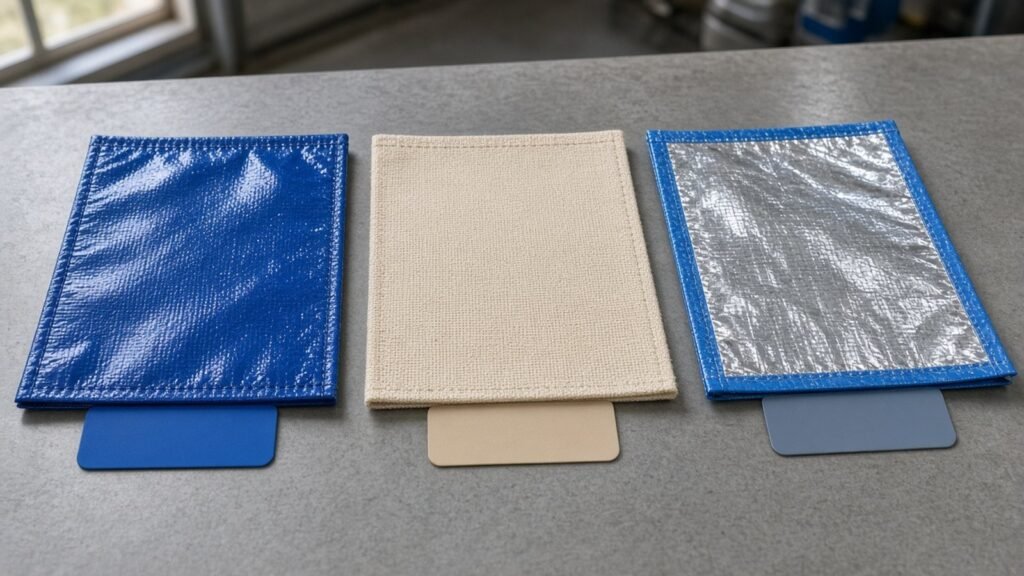
A fire retardant tarpaulin is usually PVC-coated polyester or treated canvas with flame-retardant additives, tested to show it resists ignition and does not keep burning on its own. A welding blanket is usually woven fibreglass or a similar high-temperature fabric, tested to resist burn-through from sparks and hot metal. One is a cover; the other is a heat shield.
| Fire retardant tarpaulin | Welding blanket | |
|---|---|---|
| Main job | Weatherproof cover, screen or enclosure that will not readily ignite or spread flame | Spark, spatter and slag barrier at the hot work location |
| Typical material | PVC-coated polyester or treated canvas with FR additives | Woven fibreglass or similar high-temperature fabric, sometimes coated |
| Typical tests named | Reaction-to-fire or flame-spread tests such as EN 13501-1, DIN 4102-1, NFPA 701 | Burn-through and heat tests for hot work, such as ANSI/FM 4950 |
| Waterproof and UV-resistant | Yes, normally | Not usually the point; some coated versions resist water |
| Behaviour with molten slag | Coating can soften, melt or hole; not designed for it | Designed to catch and hold it within its rating |
| Where it belongs | Material covers, hoarding, temporary enclosures, shade and storage near the work | On floors, gratings and equipment at the work, across openings, as vertical screens |
The short version: if the sheet needs to keep rain and sun off for weeks, it is a tarpaulin job. If it needs to stop a grinding spark or a drop of slag from reaching something that can burn, it is a welding blanket job. Cactus GGT supplies both; for the blanket side see our fiberglass fire blanket roll.
When is a fire retardant tarpaulin the right choice?
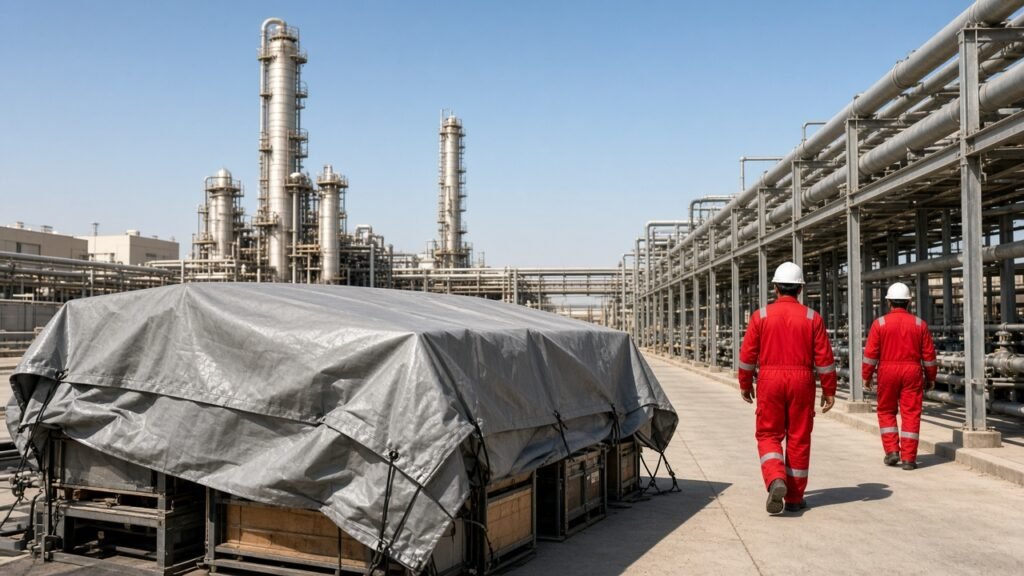
A fire retardant tarpaulin is the right choice when you need a weatherproof cover or enclosure in an area where an ordinary plastic sheet would add fuel: storage near process plant, temporary site hoarding, workshop and welding-bay enclosures, shade structures over people, and covers that your client’s specification says must be fire-rated.
Common examples on UAE sites:
- Covered storage and laydown close to live plant or in areas with an ignition-source policy.
- Temporary enclosures around work areas, where a contractor’s plan calls for fire-rated sheeting rather than standard PVC.
- Screens and hoarding that separate a hot work zone from the rest of the site, with welding blankets or curtains doing the spark work inside.
- Shade and rest shelters where people gather and a fast-burning sheet overhead would be a real hazard.
- Shutdown and turnaround covers for equipment and materials staged in process areas.
If fire rating is not needed, for example covering blocks in an open yard far from hot work, a standard sheet does the job for less. Our tips for buying fire-rated tarpaulin cover general buying points; this article focuses on where FR sheets fit and how to check them.
Why shouldn’t a tarpaulin be used as the spark barrier?
Because “fire retardant” describes how a tarpaulin behaves in a flame-spread test, not how it copes with molten metal landing on it. An FR coating can still soften, melt or burn through under slag and grinding sparks. A welding blanket is tested for exactly that exposure, so it is the product a hot work control expects.
Abu Dhabi’s ADOSH-SF CoP 28.0 Hot Work Operations lists guards and covers such as metal sheeting, mineral fibre boards and fire-retardant blankets to protect combustibles that cannot be moved. Our hot work guide explains how those controls fit together. A PVC tarpaulin, even an FR one, is not on that list as a spark barrier.
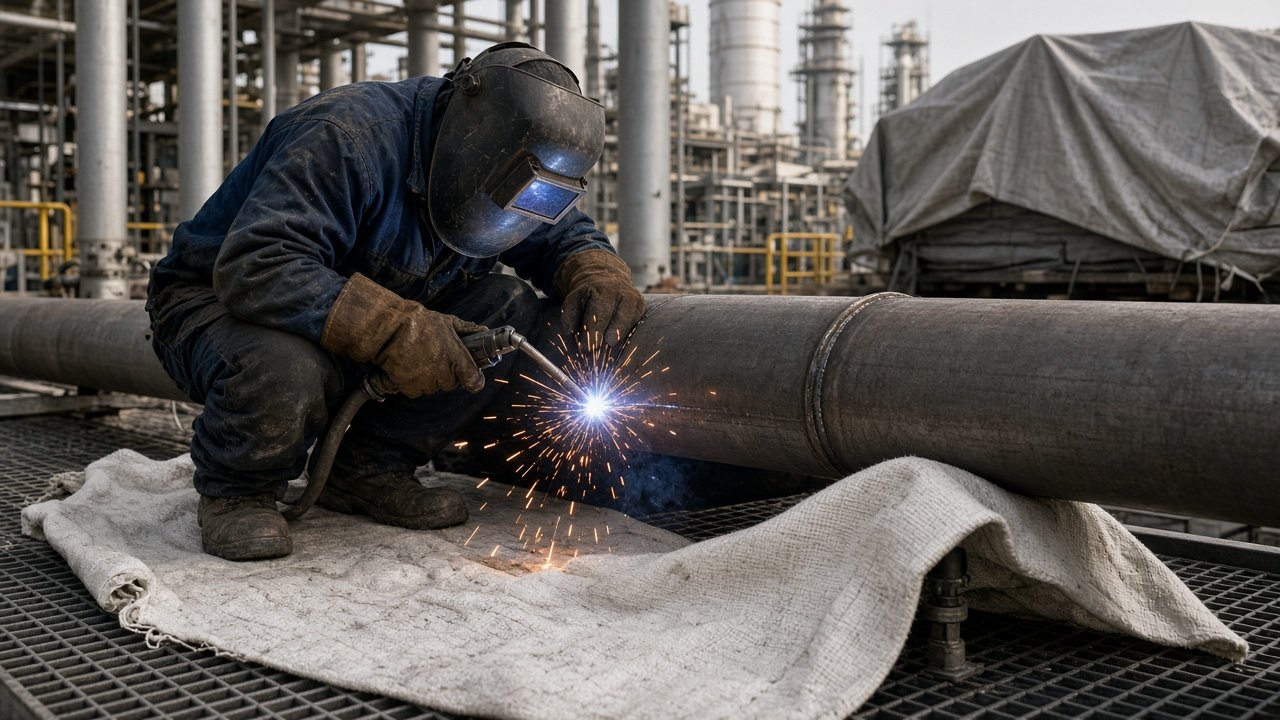
Welding blankets themselves come in grades. The FM Approvals standard ANSI/FM 4950 separates welding pads (for heavier exposure such as molten material), welding blankets (for lighter to moderate work) and welding curtains (vertical screens). Match the blanket to the work, then keep your fire retardant tarpaulin covers outside the spark zone or shielded by the blanket.
How do you read the fire rating on a tarpaulin test report?
Look for the test standard, the class achieved, the lab that tested it, the date, and a product description that matches the sheet you are buying. A test report from an accredited lab beats a one-line certificate. “FR” or “fire-proof” printed on a label, with no named test and class, is not evidence.
Three fire classifications you will often see on tarpaulin paperwork:
- EN 13501-1. The European reaction-to-fire classification. A result such as B-s1,d0 combines the main class (A1 to F), smoke (s1 to s3) and flaming droplets (d0 to d2). Lower letters and numbers are better.
- DIN 4102-1. The older German classification. B1 means “schwer entflammbar”, hard to ignite. B2 means normally flammable, so B2 alone is not a fire-retardant rating.
- NFPA 701. The US test for flame propagation of textiles and films. Its Test Method 2 covers heavier fabrics including tarpaulins, tents and awnings. It is a pass or fail result.
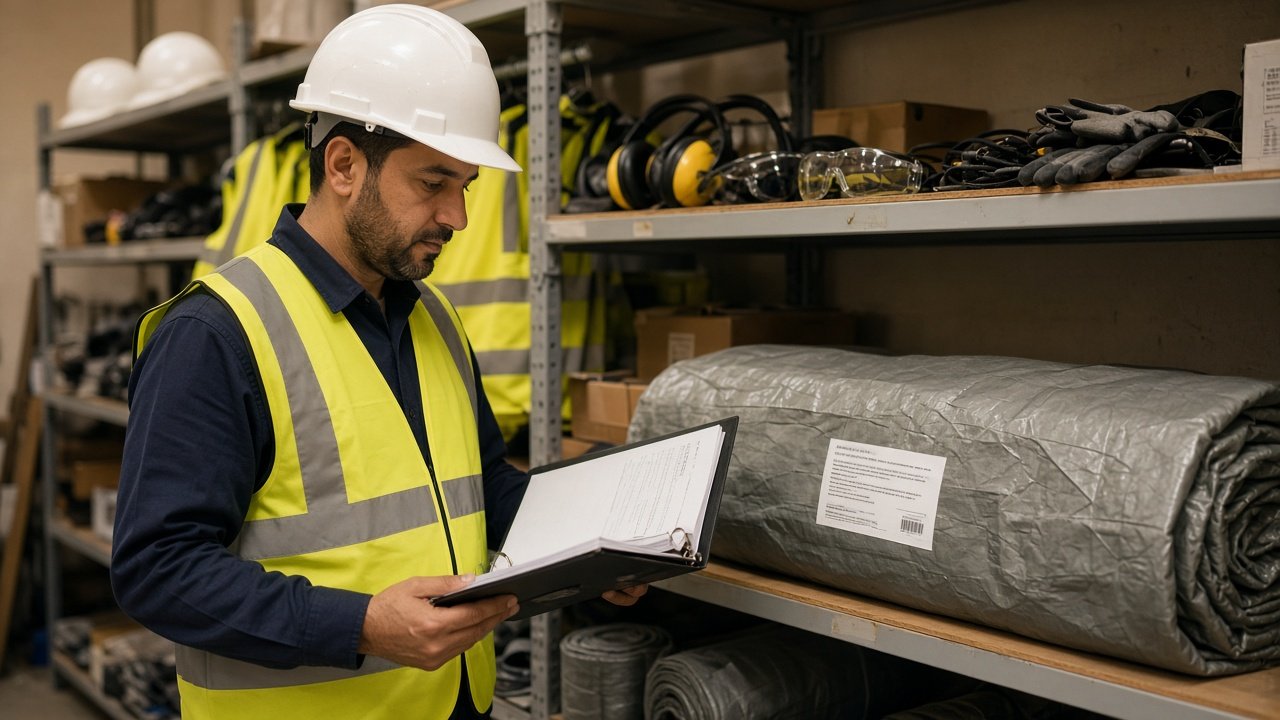
When you check a report, ask:
- Does it name the same fabric, weight and colour you are ordering? A report for a different grade does not transfer.
- Which standard and which class or result? Is it the one your client specification asks for?
- Was it issued by an independent, accredited laboratory, and how old is it?
- Was the FR property built into the coating, or applied as a surface treatment that could wear or wash off?
- Does the supplier’s batch or roll number tie back to the report?
What do ADNOC and other client sites usually expect?
Requirements come from the project specification, the contractor’s HSE plan and the site’s permit system, not from a single published “ADNOC tarpaulin rule”. In practice, expect to show the fire test report, the data sheet and evidence that the supplier is registered, and expect hot work areas to rely on welding blankets, not FR tarpaulins.
For vendor evidence, Cactus GGT is a registered and approved tarpaulin supplier under the ADNOC vendor system, with Supplier ID: 10076001. Our ADNOC approved tarpaulin supplier guide explains what that registration means and which documents to keep on file. Always check your own contract for the exact test and class required, and follow the stricter rule if the client and the code differ.
When you request fire-rated sheets, send the required standard and class with the size and quantity. Cactus GGT offers fire-retardant and non-fire-retardant tarpaulin sheets in Abu Dhabi, and we will send the test documentation for the grade we quote so you can check it against your specification before ordering.
FAQs about fire retardant tarpaulin and welding blankets
Can I use a fire retardant tarpaulin instead of a welding blanket?
No. A fire retardant tarpaulin is tested for ignition and flame spread, not for molten slag and sparks landing on it. Hot work controls expect a welding blanket, pad or curtain, or other covers such as metal sheeting, at the work. Use the FR tarpaulin for covers and enclosures outside the spark zone.
What does DIN 4102 B1 mean on a tarpaulin?
B1 under DIN 4102-1 means the material is classed as hard to ignite (schwer entflammbar) in that test. It is not fireproof. B2 means normally flammable, so B2 alone is not a fire-retardant rating. Ask for the test report, not just the class on a label.
Is NFPA 701 relevant to tarpaulins?
Yes. NFPA 701 covers flame propagation of textiles and films, and its Test Method 2 includes heavier fabrics such as tarpaulins, tents and awnings. It is a pass or fail test. Check that the report names the fabric you are buying.
Does an ADNOC site require fire retardant tarpaulin?
There is no single published rule for every ADNOC site. The requirement comes from the project specification, the contractor’s HSE plan and the permit system. Check your contract for the exact test and class, and keep the report and supplier registration on file.
Is a fire retardant tarpaulin waterproof?
PVC-based fire retardant tarpaulins are normally waterproof and UV-resistant, which is why they are used as outdoor covers and enclosures. FR-treated canvas is water-resistant rather than fully waterproof. Check the data sheet for the grade you order.
Planning covers and spark protection for a shutdown or project? Send Cactus GGT the fire test your client requires, the sizes and the quantity, and we will quote both the tarpaulins and the welding blankets. Visit our tarpaulin supplier in Abu Dhabi page or contact us for a quote.