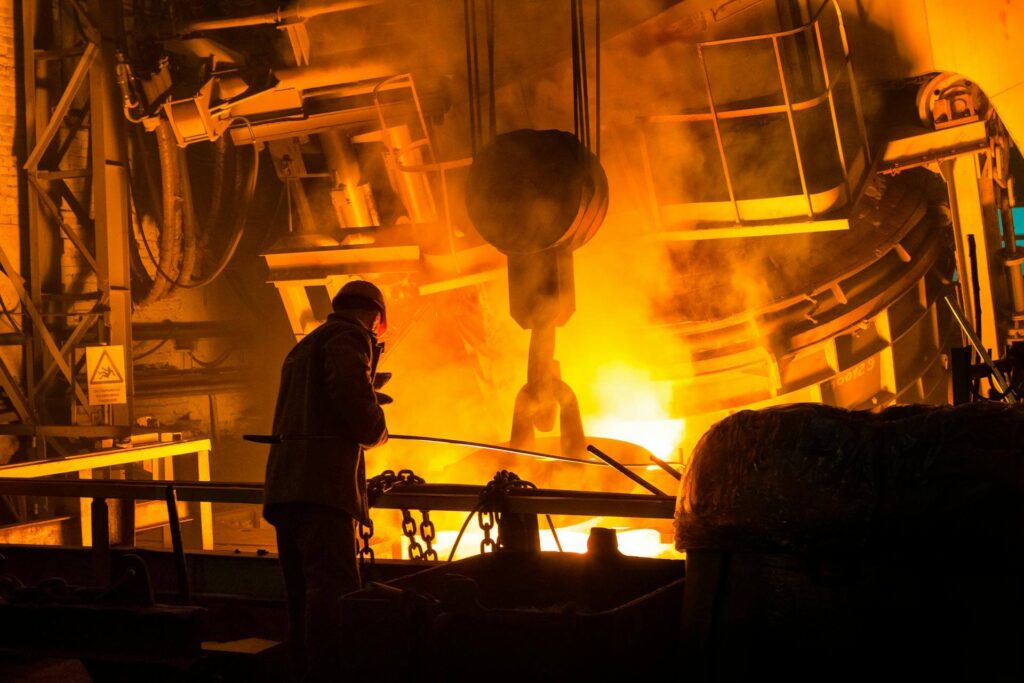
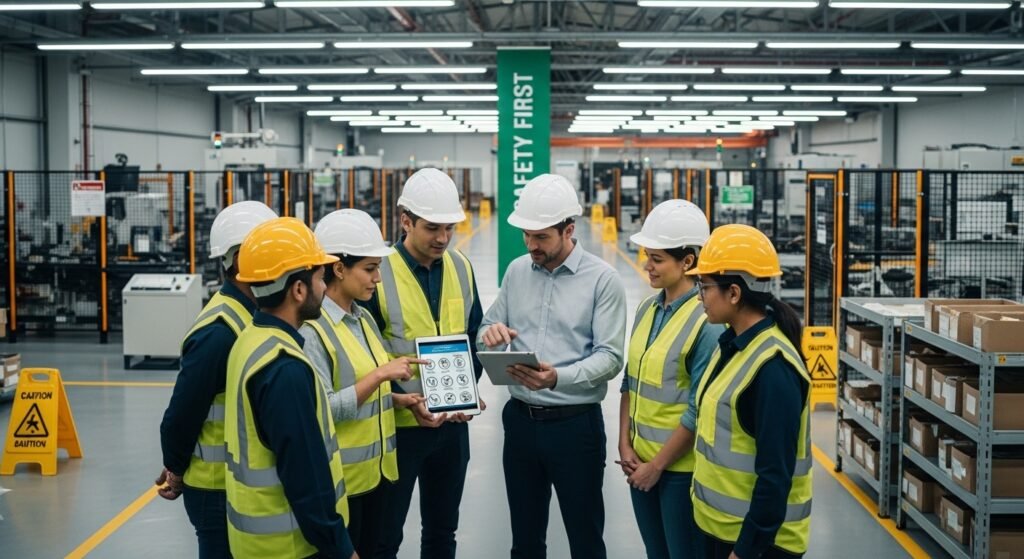
The modern industrial landscape spanning construction sites in Abu Dhabi to oil rigs in the North Sea is a marvel of engineering. However, beneath the humming machinery and towering scaffolding lies a persistent reality: the risk of workplace accidents. For workplace safety managers, floor supervisors, and business owners, protecting the workforce isn’t just a regulatory checkbox; it is the cornerstone of operational continuity and moral responsibility.
At Cactus Global General Trading, we have spent years supplying high-grade industrial tools and workplace safety equipment across the UAE. We understand that a “safety-first” culture is built on more than just posters on a wall—it is built on high-quality gear, rigorous training, and a deep understanding of environmental risks.
In this long-form guide, we break down 10 evidence-based strategies to mitigate risks and foster a zero-harm environment in any industrial setting.
1. Conduct Regular and Comprehensive Risk Assessments
You cannot manage what you have not identified. A comprehensive risk assessment is the first line of defense against the unforeseen. This process involves walking through the facility to identify “hazards”—anything with the potential to cause harm.
The Five Steps of Risk Assessment
According to guidelines from the Health and Safety Executive (HSE), a robust assessment should follow these steps:
Identify the hazards: Look for trailing cables, unguarded machinery, or chemical exposure.
Decide who might be harmed and how: Consider new employees, contractors, and maintenance staff.
Evaluate the risks: Decide on precautions. Can the hazard be eliminated? If not, how can it be controlled?
Record your findings: Documentation is key for ISO 45001 compliance.
Review your assessment: Industrial environments change. New machinery means new risks.
2. Prioritize High-Quality Personal Protective Equipment (PPE)
When engineering and administrative controls aren’t enough to eliminate a risk, PPE becomes the critical barrier between a worker and a life-altering injury.
Why Quality Matters
Not all workplace safety gear is created equal. In high-heat environments or chemical processing plants, “budget” gear often fails under stress.
Head Protection: Ensuring helmets meet ANSI/ISEA Z89.1 standards.
Hand Protection: Using cut-resistant gloves for handling metal or specialized gloves for welding equipment operations.
Respiratory Gear: Essential in environments with silica dust or chemical vapors.
At Cactus GGT, we emphasize that PPE should be the last line of defense, but it must be the strongest one.
3. Implement Advanced Fire Safety Protocols
Fire is one of the most devastating risks in the industrial sector. Whether it’s a spark from a grinding wheel or a chemical reaction, the speed of fire spread can be catastrophic.
The Role of Passive Fire Protection
Beyond extinguishers and sprinklers, passive protection is vital.
Fire Blankets: A fire blanket is an essential tool for smothering small incipient fires or protecting equipment from sparks. Our fire blankets are designed to meet NFPA standards, providing a reliable shield in high-risk zones.
Welding Curtains: In workshops, using flame-retardant barriers prevents hot slag from igniting nearby flammable materials.
4. Master the Art of Tarpaulin and Asset Protection
Many accidents occur because of poorly stored materials or environmental degradation of equipment. In the Middle East, the sun and sand are as much of a hazard as the machinery itself.
Using Industrial Tarpaulins for Safety
Slip and Trip Prevention: Using heavy-duty tarpaulin sheets to cover construction materials prevents debris from scattering across walkways.
Weatherproofing: Waterproof and UV-resistant covers prevent corrosion on heavy machinery, ensuring that mechanical failures (which often lead to accidents) are minimized.
Containment: Specialized tarps can contain dust and fumes during industrial sandblasting or painting, protecting the health of the surrounding workforce.
5. Ensure Proper Maintenance of Welding and Cutting Equipment
Welding is a high-hazard activity involving electricity, intense light, and extreme heat. Accidents in welding bays often stem from poorly maintained welding equipment or a lack of proper shielding.
Safe Welding Practices
Check Leads and Cables: Frayed wires can lead to electrocution.
Ventilation: Use fume extractors to prevent metal fume fever.
Visual Protection: Always use auto-darkening helmets to prevent “arc eye.”
Work Area Integrity: Keep the area dry and free of flammable liquids.
6. Foster a Culture of “Safety Ownership”
Workplace safety should not be something forced upon employees by a “Safety Officer.” It must be a shared value. When workers feel they “own” the safety of their station, they are more likely to report near-misses and suggest improvements.
Toolbox Talks: Start every shift with a 5-minute workplace safety briefing.
Incentive Programs: Reward teams that maintain accident-free streaks, but ensure the program encourages reporting rather than hiding minor injuries.
Empowerment: Give every worker the authority to “Stop Work” if they perceive an immediate danger.
7. Strategic Use of Industrial Tools and Ergonomics
Ergonomic injuries—such as musculoskeletal disorders (MSDs)—account for a significant portion of lost workdays. Using the right industrial tools for the job reduces strain and the likelihood of accidental slips.
Vibration Reduction: Use tools with anti-vibration handles to prevent “White Finger” syndrome.
Weight Distribution: Ensure heavy tools are supported by balancers or hoists.
Training: Even a simple wrench can cause an injury if used improperly. Ensure all staff are trained in the specific mechanics of the tools they use daily.
8. Maintain Clear Walkways and Effective Signage
Housekeeping is often overlooked, yet “slips, trips, and falls” remain the leading cause of non-fatal workplace injuries according to OSHA.
The 5S Methodology: Sort, Set in order, Shine, Standardize, and Sustain.
Visual Cues: Use high-visibility floor marking tape to designate forklift lanes and pedestrian paths.
Lighting: Ensure all areas, especially stairwells and storage rooms, are brightly lit to reveal potential hazards.
9. Chemical Safety and Material Safety Data Sheets (MSDS)
If your facility handles chemicals, the risks of burns, inhalation, or explosions are high.
Labeling: Every container must be clearly labeled according to the Global Harmonized System (GHS).
Storage: Keep incompatible chemicals (like acids and bases) in separate, ventilated cabinets.
Spill Kits: Ensure PPE and chemical spill kits are located within 10 seconds of the storage area.
10. Continuous Training and Emergency Response Drills
A workplace safety manual sitting on a shelf does nothing during an emergency. Training must be hands-on and repetitive.
First Aid Training: At least 10% of your staff should be certified in First Aid and CPR.
Fire Drills: Practice evacuating the building in different scenarios (e.g., blocked exits).
PPE Competency: Periodically test employees on how to properly fit and maintain their PPE.
Industrial Safety Checklist
| Category | Action Item | Frequency |
| PPE | Inspect gloves, boots, and helmets for cracks/wear | Daily |
| Equipment | Test emergency stop buttons on all machinery | Weekly |
| Fire | Check pressure gauges on fire extinguishers | Monthly |
| Environment | Review tarpaulin covers for UV damage | Quarterly |
| Training | Conduct full-scale emergency evacuation drill | Bi-Annually |
External Authority References
OSHA: Occupational Safety and Health Administration – The gold standard for US-based safety regulations.
NFPA: National Fire Protection Association – For world-class fire safety standards.
ISO: International Organization for Standardization – Specifically ISO 45001 for occupational health.
FAQs (Frequently Asked Questions)
1. What is the most common cause of industrial accidents?
The most frequent causes are slips, trips, and falls, followed by being struck by objects and machinery-related incidents. Most of these can be prevented through better housekeeping and proper PPE.
2. How often should industrial fire blankets be replaced?
A fire blanket should be replaced immediately after use. Even if it looks intact, the fibers may have been compromised by the heat. Regular inspections should be conducted annually to check for fraying or contamination.
3. Does Cactus GGT provide custom-sized tarpaulins?
Yes, we specialize in providing tailored tarpaulin solutions. Whether you need heavy-duty PVC for a construction site or heat-resistant covers for industrial equipment, we can customize dimensions to your project’s needs.
4. What are the key items in a basic industrial PPE kit?
A standard kit should include a hard hat, high-visibility vest, steel-toed boots, safety glasses, and hearing protection. Depending on the job, you might also need welding equipment protection or chemical-resistant gloves.
5. Why is “Safety Ownership” important?
When employees feel responsible for workplace safety, they move from “compliance” (doing it because they have to) to “commitment” (doing it because they want to stay safe). This significantly reduces “shortcut-taking” behaviors.
Conclusion
Reducing industrial accidents is a journey, not a destination. It requires a synergy between high-quality equipment, such as those found on our blog page, and a disciplined operational approach. By conducting risk assessments, investing in premium PPE, and maintaining your industrial tools, you aren’t just saving money on insurance and downtime—you are saving lives.
Workplace safety is the best investment any company can make. From the smallest fire blanket to the largest tarpaulin sheet, every piece of equipment plays a role in the greater goal of workplace security.
Take the Next Step Toward a Safer Workplace
Ready to upgrade your workplace safety standards? Explore our full range of industrial products or contact us today to discuss your specific requirements.